







Holiday Let Welcome Pack Template: What to Include for Guests
One of the easiest and most effective ways to welcome guests to your property, and help them to settle...




It’s a question we hear often; “Are holiday homes good investments?”. The simple answer is, with the right marketing and preparation a holiday home can perform exceptionally well and provide great financial returns?
If you are considering purchasing a property with a view to letting it as self-catering accommodation, we’ve created this informative guide to help you make a decision on how best to invest your money.
The past few years have seen considerable growth in self-catering holidays within the UK. This flourishing market is a result of the rising popularity of staycations, which has impacted the attractiveness of holiday letting as an investment opportunity.
For those thinking of buying a holiday let, with a willingness to be flexible and responsive to the ever-changing needs of guests, you could experience a lucrative return on investment.
Use the quick links below for specific details, or continue reading for a comprehensive look at whether holiday lets are a good investment.
Owning a holiday let can be financially rewarding and an overall fantastic endeavour. Many owners start their journey to generate additional income, supplement their savings in retirement, or simply to cover the costs of owning a second property.
Recent research supports this. In a 3Gem survey of 500 holiday home owners completed in December 2025, the top motivations for owners were using the property as an investment for future finances, and generating income during retirement. Both highlight how strongly owners view holiday letting as a long-term, financially beneficial choice.
However, holiday letting will only be profitable if you treat it like you would any other successful business. Making the decision on whether to invest in a holiday cottage to let requires careful consideration, informed by an understanding of the market, interest rates and other influencing factors.
Here are a few of the reasons why holiday lets are a good investment.
The rise of taking holidays in the UK – also known as ‘the staycation’ – is undeniably increasing in popularity.
According to the 2025 Sykes Staycation Index featuring a survey of 2000 adults, 35% of Brits are more likely to choose a UK trip over going abroad. Convenience is the main reason for this, with 56% saying UK holidays are easier to plan. The other main motivators for holidaying in the UK are that it’s less stressful and cheaper.
With research showing that the Great British staycation is as popular as ever, this could be the ideal time to invest in a holiday let.
Short-term holiday lets tend to be more lucrative compared to long-term rentals. The weekly rate charged for holiday lets are significantly higher, which increases your income potential.
According to the Sykes Holiday Letting Outlook Report 2026, the average UK holiday let owner’s gross income is approximately £25,600 per year*.
Holiday let owners can maximise their rental potential by including money earning property features. For example, adding a hot tub can earn a property on average 40% more per year. Likewise, by accepting dogs, owners achieve on average 8 more bookings and 16% more revenue annually.
Other popular features are sea views, a garden, a swimming pool and good Wi-Fi. There is also increasing demand for properties with EV charge points. Only 6% of our properties currently have an EV charger, meaning this is a great way for owners to make their accommodation stand out from the crowd.
Although the Furnished Holiday Let tax regime was removed in April 2025, there are still some other tax advantages that you can benefit from. Read our guide to Furnished Holiday Let tax changes for more information on what the change means, and holiday let tax rules you can still take advantage of.

With spectacular landscape and award-winning beaches on our doorstep, it’s hardly surprising that the biggest motivator for investing in a holiday let is that you can combine owning your dream holiday home with running a successful business and offsetting the cost of your own holidays.
We recommend that if you are thinking of buying a property, you choose somewhere you would like to holiday yourself.
With our beautiful countryside, breathtaking coast and lively towns, there are plenty of fantastic locations to choose from in Devon.
Although there are many benefits to investing in a holiday let, there are also some challenges to consider. As is the case for any new venture, the drawbacks should be accounted for when planning your holiday let investment.
It’s important to remember that you will have ongoing costs on a permanent basis, and you should be sure to budget accordingly. Read through our blog on the costs of running a holiday let for everything you need to consider.
A holiday let mortgage is specifically designed for an owner to borrow money in order to purchase a property that will be for personal use, as well as let out on a short-term basis for holiday guests.
Understanding the difference between the types of mortgages available to you as a holiday home owner is imperative.

An important drawback to consider is that many holiday lets can attract fewer bookings during the winter. So, if you have a mortgage, it pays to put aside funds to cover your repayments at times when the property is not being let.
That being said, those holiday lets offering short breaks are seeing more bookings than ever in the quieter seasons. As a holiday home owner you can choose when you wish to offer short breaks, but we highly recommend doing so year round. An impressive 40% of our bookings in South Devon were for short breaks of three, four or five nights in 2025. This is a significant rise from 32% in 2024. By refusing short breaks, holiday home owners are potentially missing many bookings.
Remember our average short break is currently taken at 74% of the weekly rental price. This means if you take two short breaks in place of one week-long booking, you’ll achieve on average 148% of the weekly rental.
Accepting last minute bookings is also paramount to ensure your holiday home provides a good return on investment. In some months of 2025, such as August and October, 2% of all our bookings in South Devon were made between 4pm the day before arrival and 12 noon on the day of the holiday start.
Creating a perfect experience for every guest can be demanding, with frequent changeovers, maintenance requirements and guest communication.
This can be quite a big commitment, but with the help of a good holiday letting agency, a lot of the manual work can be removed. Read our blog on choosing the right holiday home management service for an in-depth look at the holiday let management service solutions available to you with Coast & Country Cottages.
First and foremost, your holiday home should be somewhere you love to spend time and not just a source of potential letting income.
Location and type of property will be an important factor in your success and will dictate the amount you can charge and the ultimate return on your investment.
As South Devon experts, we know all about the best places to buy locally. The areas that currently have the highest search demand are Salcombe, Hope Cove, Brixham and Dartmouth.
Sea views, parking and the distance from the beach, shop or pub are all notable location features to consider.
Here in the South West, there are a huge variety of properties in spectacular locations to choose from. Read our blog on where to buy a second home in South Devon for an insight into what to consider when searching for a holiday home.

Whether your holiday home is likely to be a profitable venture in the long term depends on a variety of elements. The type of property, its location, number of rooms and property features will determine the pricing strategy and overall revenue.
It’s also important to consider which guests you want to attract to generate a lucrative flow of bookings:
With this in mind, providing flexible, inclusive accommodation will help you appeal more widely. Zip and link bedding configurations are increasingly popular, allowing for a variety of party makeups.
Selecting the right furnishings and equipping a property to the highest standard determines the look and feel of a property. This is a key factor that will influence guests when booking their holiday.
Creating a space that makes guests feel at home and shows you’re going the extra mile to make their stay enjoyable is key to your letting success. Read our blog on how to furnish a holiday let for key tips and expert advice.

Choosing a trusted and reliable management agency is key to the success of a holiday let investment.
Finding the right team for professional advice and support can make all the difference, helping you get the best from your letting journey.
Partnering with industry experts like Coast & Country Cottages, who specialise in the self-catering holiday market, is key to your property’s earning potential and overall success.
For a more in-depth look at what to expect, read our blog on how to start a holiday let business.
If you are considering buying a holiday home as an investment, there are some costs which should be factored in before you make your purchase.
These can include solicitors’ or legal fees for handling the conveyancing, mortgage arrangement and valuation fees if you’re financing the property, and the cost of a professional survey. While a survey is optional, many buyers see it as a worthwhile expense to assess the condition of the property and avoid unexpected repairs later on.
Stamp Duty Land Tax (SDLT) is a tax paid when you purchase residential property or land in England or Northern Ireland. You only begin paying SDLT once the purchase price exceeds the current £125,000 threshold, with tax increasing progressively in line with the property’s value.
If you already own another property — including if you’re buying a holiday let — you’ll usually pay a 5% surcharge on top of the standard SDLT rates.
We’ve written a useful blog on Stamp Duty for Holiday Lets, with a full explanation of the higher rates and how they affect holiday home owners.
The rules and regulations are updated periodically, so it is advisable to make sure you are aware of the impact it will have on your buying price. Find out further information from HMRC on stamp duty.
To work out how much your stamp duty will be, use the Government’s Stamp Duty Calculator.
When buying a home to let you’ll be doing so with the aim of profiting from capital appreciation, rental income or both.
If you would like a good idea of your property’s earning potential, our New Property Consultants can offer expert advice.
Our team can talk you through the process of buying a property and give an idea of the income you can expect, based on our expert knowledge of our area, pricing, and demand.
To arrange a free, no-obligation income and bookings proposal, complete the form below. You’ll also receive a copy of our FREE Owners Guide.
According to estate agents, Luscombe Maye, the highest level of enquiries for holiday homes is during the month of January. We had a chat with Luscombe Maye where they shared tips on holiday home investments in Salcombe.
If you need assistance in buying a holiday home, we would be happy to put you in touch with some of our fantastic South Devon estate agents.
If you are thinking of investing in a holiday let, our New Property Consultants can support you in making the right choice, with a wealth of knowledge and years of experience in the holiday letting market.
Whatever stage you’re at in your holiday letting journey, Coast & Country Cottages are happy to help. Contact our New Property Team on 01548 802171 or complete the form below to request contact from our team, including a copy of our free Owner Guide.
.
If you’re looking to start a holiday letting business, the following owner guides may be useful to you:
Holiday letting remains a robust way to earn money, and owning a holiday home is still a good investment, whatever your motivation. Devon is still popular as a holiday destination, with its beautiful scenery and beaches, commanding high weekly rental values – and owning a holiday property has additional benefits as it enables you as an owner to use it as you wish. Ensuring you optimise your booking and income potential is essential for guaranteeing maximum returns. By utilising a good letting agent like Coast & Country Cottages, you can be confident your pricing, marketing and property management are all well executed, giving the best chance of success.
Not usually. Holiday lets that qualify as self‑catering businesses are assessed for Business Rates, meaning council tax isn’t charged. However, if your property does not meet the required letting criteria, it will fall under council tax — and many councils now apply large premiums to second homes, up to 100%, essentially doubling your cost. For more information about this, read our guide Holiday Let Business Rates & Council Tax Guide for 2026.
A long‑term let is rented to the same tenant for an extended period, providing a permanent home and generating steady monthly income. A holiday let is rented short‑term to guests for breaks and holidays, with higher weekly rates, seasonal demand, and frequent changeovers. Holiday lets must meet specific availability and occupancy rules to qualify for Business Rates, and require more ongoing management. Long‑term lets fall under standard residential tenancy rules and are charged council tax.
In 2025, the average UK holiday let generated £25,600 in gross income, rising from £24,700 the previous year. Smaller properties earned around £16,800, while larger five‑bed homes achieved up to £48,200 annually. Typical owner costs — including changeovers (£1,190), maintenance (£1,580), bills (£2,140), marketing (£1,000) and tax or licensing fees (£1,450) — total roughly £7,360 a year. After these expenses, many owners still see strong returns, especially as booking demand continues to rise, with 2026 set to be a record‑breaking year. Of course, the profit on a holiday let depends on property size, running costs and booking performance, but this recent data from the Sykes Cottages 2026 Holiday Letting Outlook Report gives a helpful benchmark.
At the time of publishing, Coast & Country Cottages has taken all reasonable care to ensure that the information contained in this article is accurate. However, no warranty or representation is given that the information is complete or free from errors or inaccuracies.
Generic information is contained within this article and each individual’s mortgage and saving affairs are different, further advice should be sought from a qualified supplier.
*Statistics published in Sykes 2025 Staycation Index.
Please Note: The information contained in this article was accurate at the time of writing, based on our research. Rules, criteria and regulations change all the time, so please contact our prospective new owner team if you’d like to hear how. Nothing in this article constitutes the giving of financial, tax or legal advice to you; please consult your own professional advisor (accountant, lawyer etc). in this regard. If we have referred within the article to a third-party provider of unregulated holiday let mortgages, this is due to the fact that such mortgages aren’t currently regulated by the FCA.
As a helpful reminder, your home may be repossessed if you do not keep up repayments on a mortgage, so again anything you decide to do in this particular area this is one on which you should take your own professional advice on too, as we aren’t providing and can’t provide you with this.
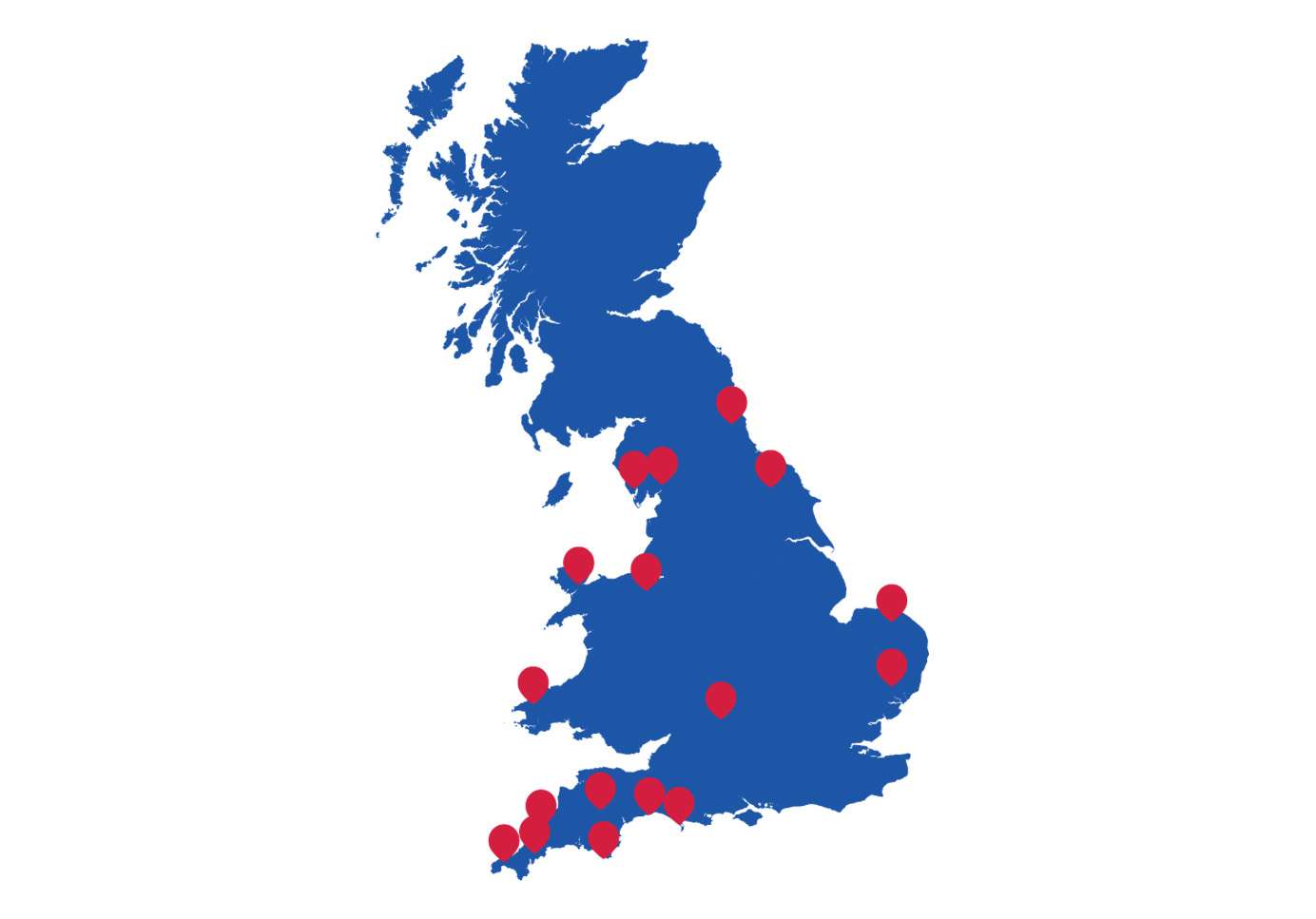
Interested in letting a property outside of South Devon? We’re proud to be part of Sykes Holiday Cottages, with a network of regional brands offering the same award-winning service across the UK. Enquire now to be put in touch with your local holiday letting experts.

Find out how we can work together. With over 25 years’ experience, our local expertise will give you peace of mind and bring you the bookings you deserve.

I’ve had the privilege of living in the beautiful South West since 2010, and in my opinion there’s no better place in the worl...
Read More About Author
Sign up to receive exclusive offers, competitions and the latest news to your inbox, and you'll be entered into our monthly prize-draw 3 times!

One of the easiest and most effective ways to welcome guests to your property, and help them to settle...

According to the UK government domestic homes account for around 13% of the UK greenhouse gas emissions. In an...

All self-catering holiday homes in the UK are subject to specific holiday let rules and regulations. As an owner,...

